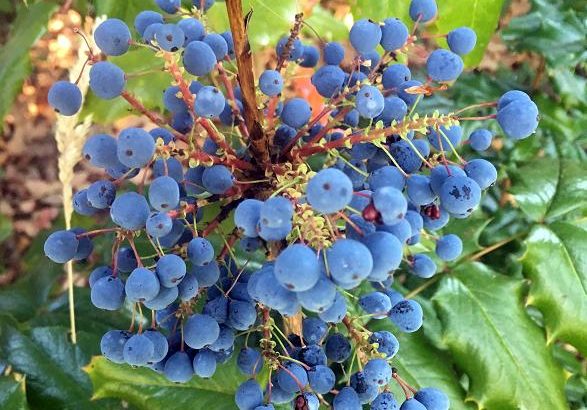
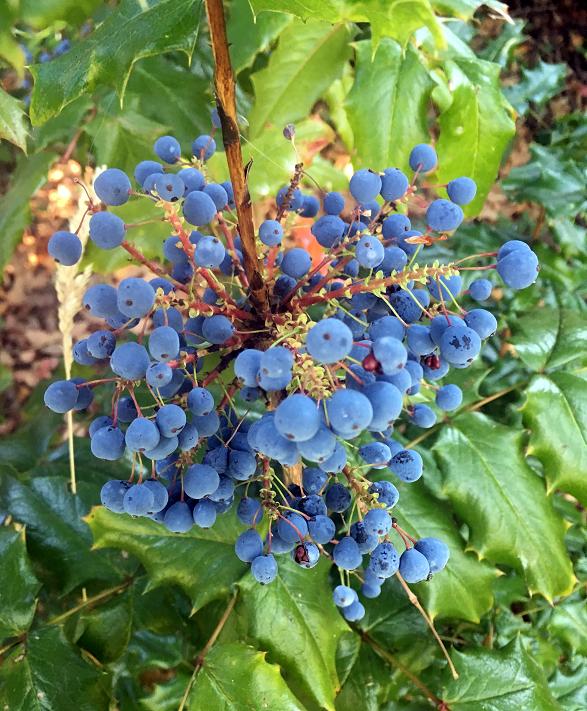
 Nothing makes an amateur forager feel more like a rock star than passing some scrumpy-looking bush in the neighbour’s yard and telling your friends, “See that there… You can eat that.” And you probably have a friend or two who’s down to try anything and immediately pops whatever berry you just pointed out into their mouth.
“Bleeeeaagggh! Why would anyone want to eat this!?” comes the response, followed by the look of betrayal. “This tastes nothing like a ripe blackberry. It’s sour! Why did I listen to you? You’re not a rock star! What if this is poison?” It is a scene we foragers know all too well… I’ve had it happen a couple of times to me and still recall the sting of recrimination and weird looks. *laughs*and it always seems to be thanks to Oregon grape.
 I haven’t posted as regularly as I usually do this summer and for that I deeply apologize to the handful of crazed kitchen folk and family members that subscribe to EDB. *laughs* We are still here, banging out recipes and philosophizing on life the universe and everything… It’s just been a rough couple ‘o months.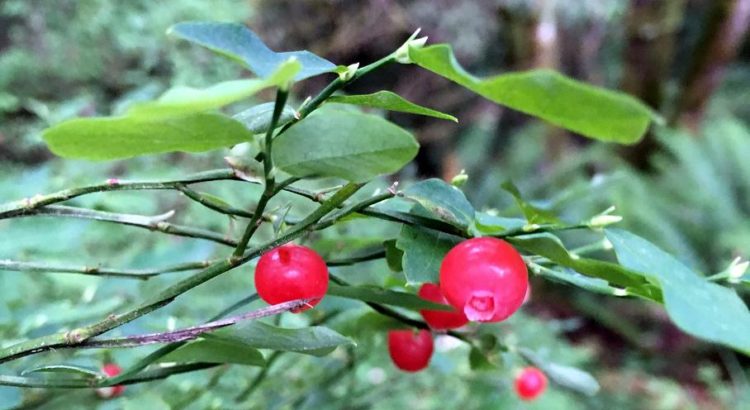
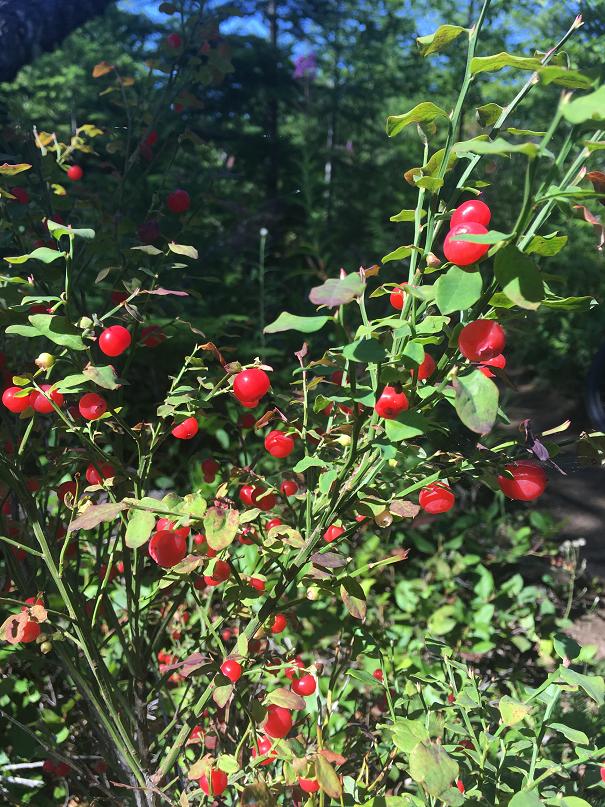 Its summer holidays for the EDB team (yes, we get those!) and the agenda is filled with eating, drinking and mountain biking. And everywhere we go, from the top of Mount Washington to the deepest, darkest forests of Squamish there are truckloads of wild edibles to keep us energized during our long days of adventuring. Chief amongst our foraged pick-me-ups are red huckleberries, which fully ripen right around now and can be found growing just about everywhere in BC.
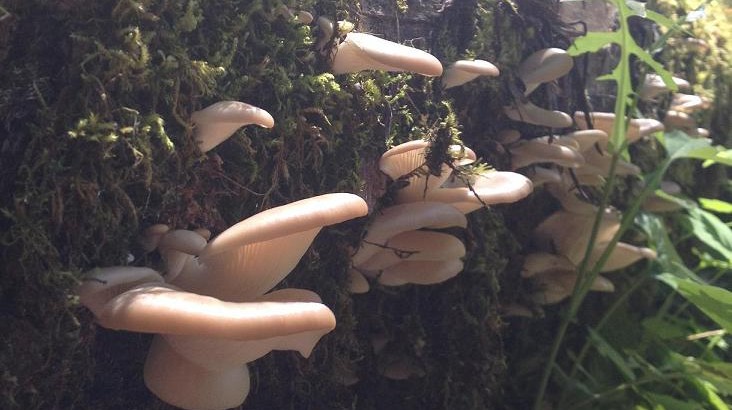
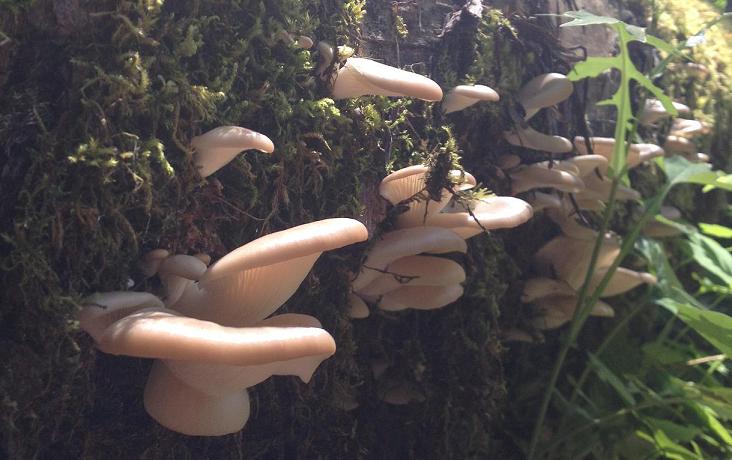 In the fertile forests surrounding Cumberland there is a special spot, just a couple ‘o yards from their famous mountain biking trails (hint: just across the bridge and to the left) that so many of us crankjobs fly past without a second glance. In this dank little oasis, tucked away under salal bushes is a rotten old alder tree (nearly 15 meters long and god knows how long dead) that houses a secret, edible ecosystem.